Monday, 23 November 2020

初めての日本旅行

** If you want to help me with my Japanese, please send me an email. Thank you **


僕の日本旅行について書くで日本語の練習をしにします。最初の旅行は2011年です。ある夜、ジョールという高校のクラスメートは僕たちが一緒に日本の旅行のことを提案しました。2011の東北地震が起こったばかりだったから、日本の方の航空券は値段が低いでした。僕は簡単に説得されて、突然に二時間後僕たちの航空券は買ってしまいました。空港に行って、飛行機を乗りて、10時間後大阪に着きました。


日本はきれいな国とかポップカルチャーは面白いとか日本生活は賑やかなと知っていましたけど、大阪に着いた時あのようなワクワクのは期待しませんでした。

今でも、あの最初の気持ちはまだ覚えっています。僕はあの最初の日から日本が大好きだと気付きました。


久しぶりだったので、旅行のスケジュールはもう覚えませんが、大阪の後東京に行ったと思います。僕の思い出によって、東京は大阪よりあまり賑やかだと思いました。僕の感激は、東京人が大阪人よりもっと忙しくて、生活はストレスが多いでした。今でも、その意見を持っています。


観光のため東京を足で歩き回ってあと、僕たちは喉がかわいので、バーに行くにしました。僕はイギリス風のバーにあまり行きたくなかったが、ジョールは「HUB 」を提案しました。バーの中に、二人の若い日本人男性を会いました。一緒にテーブルで座って、ビール飲みました。すぐに、僕たちは酔ってしまって、グラス4杯「stairway to heaven」というカクテルを注文しました。カクテルは本当に強いでした。愚かなことにあのカクテルを二杯に注文しました。

バーからタクシーまでジョールはほとんど歩けませんでした。次の日は二日酔いでベッドで泊まりました。


最終の日、僕たちは、僕の大学時代の「よし」という会った日本人をお台場で会いました。お台場でビールを飲んで、フェリーでお台場から浅草まで行きました。よしは僕たちに神社で祈る方法を教えてくれました。その後、浅草から新宿の歌舞伎町に行って、しゃぶしゃぶレストランで食べました。あの時は、飛行機を飛んだ時から耳がちょっと気が悪かったから、よしに薬を頼みました。よしは彼の鞄から薬をくれて、薬のおかげで耳の痛みが早く消えました。


よしは親切な人です。僕たちは2005にいくつかの幸せの日が過ごしました。2005から2011まで長い時間が過ぎました。それらの年には、よしなくて、寂しかったでした。

Monday, 9 November 2020

日本語はもう出来るかどうか知らない

久しぶりです。日本語をしゃべる時と書く時から、一年間とか、二年間だと思います。日本語興味は少し消えちゃった。

理由は分からない。N3級を完成させたがったけど、時間とモチベーションはなかった。

ここで日本語でもっと書いたら、 進歩しるかもしれません。日本語で話したり書いたりするのはもっと簡単になるかもしれません。

明日トピックに決めって、何か日本語で書くにします!

Thursday, 30 April 2015

第五: J-CULT THURSJAY!


ゲスの極み乙女
Gesu no Kiwami Otome
"Girl at the height of rudeness"

One of my good friends, who is still living in Japan, has just sent me a link to an awesome song by this band. The song, 私以外私じゃない "Not a me other than me", was released this month (I think), and I have not been able to stop listening to it. You know, it's one of those songs that is just as good as the very first time you heard it. A real banger! Well, more of a real bopper.

I love all aspects of the song, especially how the song gets all jazzy at the end. The music video, accompanies it perfectly, once again incorporating the image of old traditional Japan with images of Japan today - oh, and there's a slightly 70s disco look thrown in there as well. AND some coke bottles on the stage. From having a look and a listen at their other tracks, it seems like a lot of their songs have this interesting mix of musical styles.


Each of the band members, including Enon Kawatani from Indigo la End, enjoyed having a jam together, so they formed Gesu no Kiwami Otome in 2012. Here is their latest song: 私以外私じゃない.Once you've checked that out, have a look at the music video to one of their earlier songs ドレスの脱ぎ方 ("How to take off a dress").


Sunday, 26 April 2015

My JLPT | 僕の日本語能力試験

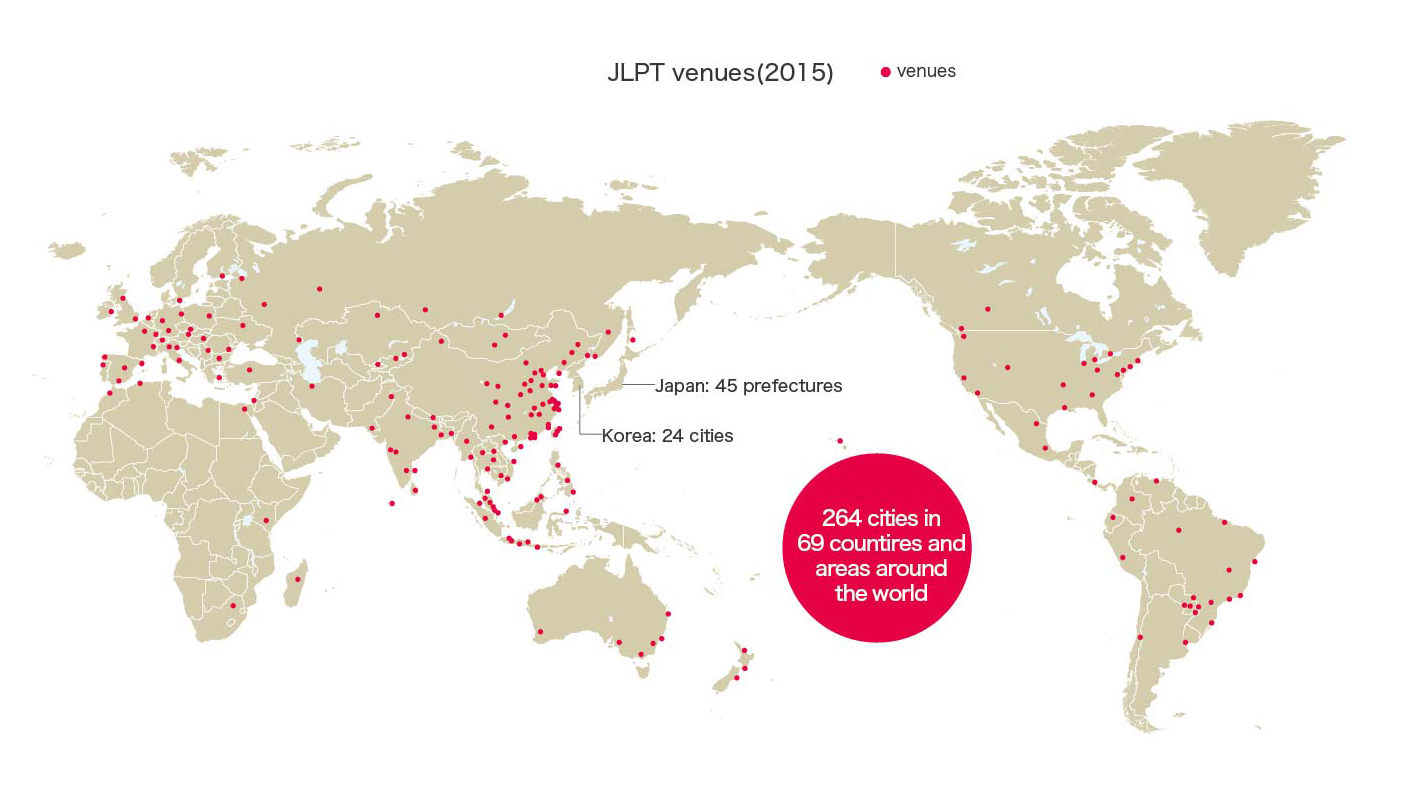
As I have mentioned in some previous posts, I have been wanting to sit for the JLPT exam for a long time - in fact, I have wanted to sit for it ever since I studied Japanese at university. I remember after first year, some of my teachers said it would be a great exam for us to do to test our Japanese and also to gain a certificate. When my classmates sat for it and passed, I felt a little upset with myself that I hadn't also, but in those early days, my Japanese was quite weak compared to my classmates, so I probably would have failed. 


What is the JLPT, you may ask? It's the Japanese Language Proficiency Test - an exam which anyone can do to check ones level of Japanese proficiency and to gain an internationally recognised certificate which may help when finding work in and out of Japan.

My main reason for wanting to sit the test was to prove to myself what level I had achieved since my time at university. After uni, I took a break from studying Japanese as I felt it was too hard and that I wasn't getting anywhere with it. I would study so hard, and then at the end of the day, I would get so upset that I could barely string a proper sentence together. 

Little by little, my enthusiasm for learning Japanese increased. I became re-inspired by watching Japanese films, by listening to Japanese music, and also by watching YouTube videos of other people practicing their Japanese. Some of the vloggers were so good at Japanese, I felt as though improving my fluency was actually a possibility.

After deciding that I might be able to sit for the N3 exam, I bought the nihongo no somatome text books and spent one year studying. Nothing was sticking in my memory as I desperately tried to hold on to the week-by-week structure of the textbooks. I almost gave up, thinking that N3 may have been too advanced for me.


Then, I stumbled across the JET Programme on the net, and realising I may actually be eligible to apply, I got my papers together, sent them off, and WHAM! I was asked to an interview. Off I went - a year's adventure in Japan began - not just for me, but for my Japanese! 

I knuckled down before I left, revising and studying Japanese as much as I could. I noticed I had improved a little, until I arrived in Japan and realised how much of a learning curve was awaiting me. When people spoke to me, I found it so hard to understand them. It was like I had been thrown into a forest of foreign words. 

A few weeks later, something clicked. I could understand quite a lot of what was being said. I could read more than I thought I would be able to. I could pick up words and phrases quite quickly. However, I could barely speak with others, and my frustration continued to grow. This frustration made me want to stop studying altogether.

I decided I needed to push myself. Me and some of my friends decided we should all sit for the JLPT. Before we could get out of it, we sent off our money - 6,000 yen - or something like that. From that moment on, I spent whatever free time I had studying Japanese.

On the day of the test, I was so nervous. I wasn't sure if I had studied enough. I remember feeling as though I had concentrated mostly on vocabulary and kanji and had neglected grammar and listening practice. 


I sat down at my desk. My test sheet arrived. The clock started. I recognised most of the kanji! I knew or figured out the vocabulary questions! I understood the majority of the listening section - or so I thought... Then, grammar and reading came. The last three sections were so difficult. 

As I left the exam room, I was not so confident that I had passed. I had studied so hard and spent such a long time believing that I would be able to pass N3. Had I studied in vain? You find out if I passed if you read a previous entry.

What would I do if I could go back?
I would buy the practice test to find out which sections I needed to work on. I thought I had studied vocabulary too much, but it turns out my vocabulary was still lacking somewhat. I also really should have focussed more on reading practice.

Has the JLPT exam helped me? 
I needed to know what level I was at, and once I knew, I felt much better. Studying a language on your own is great, but after a while, you need some kind of proof that you have learned things and improved your knowledge of the language. I am so glad I did the JLPT to give myself some closure.

I wrote this to remind myself of my experience. If anyone reading this finds it interesting, or wants to know more about my experience, let me know. :) 

第四: J-CULT THURSJAY!


Some J Soul Brothers? Anyone? Yes, please! 


Here is their new track Storm Riders feat. Slash which was released this April! I have been waiting for some new Jpop tunes for my iPod, so I am super happy right now, and also really excited to do the ironing (I iron as I listen to music)...

I love it - I think J Soul Brothers (and Exile), are defs my favourite Japanese boy band. Actually, I know so! I can't think of any others that I like more. I tend to prefer Korean boy bands to Japanese ones, and it is often hard to beat Korean boy bands because they all dance and sing so well. The music videos are also so creative. Enough about Kpop.

So, I have heard that they are releasing another song this month called Starting Over - but I haven't been able to find it sadly. If you find a link, please send it to me. I think it might be a ballad, which is usually not my cup of tea. Then again, I think they could convince me otherwise somehow. Very easily...

Well, here's the new one for your enjoyment. I added some older ones that I love to the bottom too. Hey, who is Slash, by the way? 


STORM RIDERS feat. Slash:


O.R.I.O.N:

R.Y.U.S.E.I:


FUYU MONOGATARI: (My favourite!)


Wednesday, 10 December 2014

第三: J-CULT THURSJAY!

I love サカナクション (Sakanaction), and for those of you who don't know them yet but like Japan and electro music, BANG! Sakanaction is a beautiful union of the two and you should have a really good listen to all of their stuff. Their lyrics are equally as beautiful.

After my time in Japan, Sakanaction holds an even more special place in my heart than it did beforehand. I got on very well with one of the ladies at my school and one day it snowed and snowed and snowed, so much that there was no way I could ride back home on my bicycle. She kindly offered to drive me home, and as the car started, Sakanaction started playing loudly from her car stereo. As she turned it down, she frantically apologised for having it so loud, but I told her to turn it back up because she was playing a song I loved! We both laughed hysterically as she couldn't believe I liked Sakanaction, and also because I had unfairly expected her not to be into such music! It was a great moment and one I will always remember. In fact, I have just finished writing a letter to her by hand and in Japanese! (I haven't written in Japanese since I left almost four months ago!)

So, here are my personal favourites which you should go and look up on youtube:

- 夜の踊り子
- ミュージック(Have a look at the lyrics for this one!)
- Ame(B) 
- minnanouta 
- ユリイカ

The reason I am posting about Sakanaction is because they have recently released two new songs, さよならはエモション (Goodbye Emotion) and 蓮の花 (Lotus Flower) which has a really awesome music clip as you will see below. One thing I love about Sakanaction is the dreamlike nature of their music and videos. As you watch, it is as though the imagery leads you toward a place where you are closer to the music, and that in turn sets your mind off on a beautiful adventure! 


On a different topic, have you ever heard of Rabbit Island? ウサギ島 (Usagijima) or 大久野島(Ōkunoshima)? Well, neither had I! It's a little island located near 竹原 (Takehara) in Hiroshima Prefecture.


Originally a home to Japanese fishermen, the island was used in WWII as a place for producing poison gas for chemical warfare. After WWII, the poison gas factory became a museum and hotels, a golf course and camp sites were built. Now the island is home to hundreds of rabbits which are tame and can be fed. I am so sad I never visited the island when I was in Japan, but as I love rabbits, I will add it to the list of places to go.

I found a lovely little video of the rabbits which you can see here (click me!), or have a look here at the following video by David Tang on his adventure to the island! After seeing it, I really want to go there and have rabbits jump all over me! 


I hope you enjoyed the THIRD J-CULT THURSJAY! Here are some links that might interest you:


Friday, 5 December 2014

第二: J-CULT THURSJAY!

I'm already one day late for my J-Cult Thursjay post! How awful. I will try harder next week!

This evening, after finding articles on Japanese art trends, strange panda seats on trains, and an elaborate advert for the Japanese department store Isetan with their song isetan-tan-tan (you really should have a look. It's so cute!), I finally found something really awesome! 

Vampillia is a Japanese band which was started in Osaka in 2005. They have a really interesting style which I find incredibly exciting yet difficult to describe. Their music takes you on a journey from gentle, hypnotic sounds and experimental orchestral music to fast-paced death metal crossed with punk/grunge. I'm not very good at describing musical styles - never have been - but this one is really hard to label. They say it themselves on their facebook page! Anyway, who needs labels.

This evening I have been checking out their newish song Mirror Mirror. The video clip complements the music incredibly well with beautiful and sometimes shocking animations playing with fractals and images melding together to form interesting shapes. In fact, the more I watch it, the more intriguing it is seeing the beauty juxtaposed with quite horrific images! Have a look! 


Having a quick listen to some of their other music, lilac is also really lovely! Such beautiful orchestral music! Northern Lights is really awesome as well! I will definitely spend a little more time with these guys! From the look of it, they have been quite successful and have done a lot of tours all over the world including one to Australia! I wish I'd known beforehand! Here they are for your enjoyment! 


If you want to know more about Vampillia, here are some links!

Vampillia Official Web Page


Vampillia @ facebook

Buy an album!


Wednesday, 26 November 2014

第一 J-CULT THURSJAY!

Over a year ago, I remember posting the following:


Ha! Well, that never really happened. Perhaps my little project was unreasonable considering how busy my life was at that time. Short films, theatrical productions and the like...     . . .

Instead of going all out, researching and writing a thesis on each topic that interests me, I am going to trawl the net each Thursday and find one thing I like from Japanese culture. I'm going to call this section THURS J-CULT! I'm hoping there are no horrid cults out there calling themselves this. So, this is most likely going to be from Japanese pop culture, but I wont close any doors. Not even my front door. (It's rather hot and the breeze is gently blowing up my short leg...)

Today will be the first, and I have no idea what I'm going to find. Let's have a look now. BRB......


Well, I have found something super interesting related to Japanese culture! It is also related to teddy bears, and who doesn't like soft, fluffy things!

Steiff, the maker of the very first teddy bear in the whole entire world, has just made a totoro plushie! In case you didn't know, My Neighbour Totoro (となりのトトロ) is an anime and a Hayao Miyazaki masterpiece from 1988. (Check here for a trailer!

(From http://yattarjapan.com/en/3008302/)

Apparently Steiff has made Hello Kitty plushies in the past, but the totoro plushie will be the first plushie from a collaboration between Steiff and Studio Ghibli

Unfortunately you can't buy it now, but if you get in early, you'll be able to score yourself one for about $400 sometime next year in 2015! Remember, you have to fill up the back seat of your car with soft toys and that includes Steiff teddy bears. Just don't park anywhere with a high crime rate... Steiff totoro plushies are a limited edition, so don't wait! I want one, but I am still trying to justify purchasing a giant pikachu plushie from the Pokemon Centre in Japan last year...

Tuesday, 18 November 2014

Thinking about studying Japanese?

Are you considering setting off on a journey of learning Japanese? Well, I thought I would give you a little advice from my experiences. In the previous post, I wrote about why I started learning Japanese and also about what difficulties I have come across on my journey. In this post, I will discuss what I would do if I was starting out from scratch.


1) Why do you want to learn Japanese?

Over the last decade, I have been an ESL teacher in my home country as well as overseas. When I meet my class for the first time, I always ask them what their motivation is for learning English. Some of my students had some very good reasons why they wanted to learn English, however many of the others had no idea what use they would have for English in their futures. My very first lesson focusses on how English can benefit their lives. From then on, whenever there is an aspect of English that poses a challenge, the students can look back to the first lesson and remind themselves of their personal reasons for learning. 

For me, I studied Japanese for the following reasons:

  • I wanted to learn an Asian language
  • I wanted to understand Spirited Away 

Those are very simple reasons, but in those early days, they were my motivation. Later on, I fell in love with kanji and I had a new reason - I wanted to be able to read as many kanji as I could. Of course, back then I had not considered the bigger picture, but now I have many more reasons. I recommend really asking yourself what Japanese language could do for you. If you love Japanese pop culture and really want to be able to understand the new song by the latest visual kei artist, keep motivating yourself with that in mind. 

However, don't forget that one day, if you try your very, very best with your studies, your language skills might enable you to go to Japan for work. If that is the case, it will be life-changing, and you will open up so many doors for yourself and your future career. Japanese is also a wonderful language to learn for communicating with millions of people outside of Japan as well. This can help you if you ever go travelling around the world as well as if the company you work for in the future has Japanese speaking clients etc.

To keep reminding yourself why you are studying, write your reasons on a piece of paper and try and glance at it just before you start studying or whenever you find something challenging.


2) Buy a notebook!

Buy yourself a little notebook or one of those wonderful vocabulary notebooks, and note down words that you find applicable to you and your situation / interests in life. For example, if you really, really like watching movies, find out what the word is for 'movie' and note it down. If you play the drums, find out how to say 'drums' or 'I play drums' and note it down in your notebook. 

Try also to note down random words that you come across that you like or find interesting. I remember seeing the word 'shy' in a vocabulary list at the end of my textbook and after a few weeks of having wanted to say that word and having forgotten to look it up, I had finally found it, and after noting it down in my notebook, I found it easier to remember and knew where it was if I ever was to forget it.

I also recommend compiling the words you have noted at the end of each month and drilling them either as a separate vocabulary list or by making them into flash cards.


3) Buy yourself a dictionary and a phrasebook.

In the early days of my Japanese learning adventure, I spent hours and hours flicking through my dictionary and familiarising myself with words. I did not try to memorise any words, but I looked up this and that and noted this or that down in my notebook. I also focussed on the beginning sounds of words. 

For example, I started at the sound 'kan' and had a good look at all the words that started with 'kan'. Have a look at the kanji and compare it to the kanji for 'kan' in the previous dictionary entry. Then look at the following entry, find all the words that begin with 'kan' and glance at the English meaning of those words. Perhaps you'll notice the words share a similar meaning or idea. 

Obviously this is not about memorising the words, but I believe that from doing this, I managed to remember some things that I had noticed. I managed to familiarise myself with certain kanji which shared similar ideas and every so often I see a kanji and I somehow miraculously remember it has something to do with 'extinguishing' or 'ice'. 

Phrasebooks are also great to flip through in the early days of language study. Once again, don't obsess about remembering things. Just spend your time noticing the language and how things are said. Have a look at the restaurant section and try and notice sentence structures that are repeated, or have a little look at what the Japanese word for 'coffee' is. Phrasebooks also offer a little cultural insight into Japanese customs which are always good to know. When I first ventured into studying a second language, I actually started learning with a phrasebook as that was all I could afford at that time.


4) Flashcards, Vocabulary Lists and Labels.

I tried to use flashcards, but after all the effort of making them, I quickly got bored of them and they ended up being shoved in a box in my spare room. I do know that they are worth sticking with. If you can't be bothered making cards, a vocabulary list works just as well and you can hide the answers with a piece of scrap paper. While I was in Japan, I spent most of the year making lists and learning words that way and found it worked very well.

After a few months, find your old flashcards or vocabulary lists, revise them and test yourself. A good friend might give you an hour or two and test you on your vocabulary lists if you buy them a milkshake at your local cafe. You might want to write the words in romaji unless you know some native Japanese speakers. 

I have no suggestions in regards to flashcards, but for vocabulary lists, it is good to put all your lists in a folder so they're all together. I have been studying languages for years and have so many random lists hidden in books here and there and all over my house. It gets a little messy...

Don't forget Anki! It is a wonderful free online resource which enables you to create your own flashcard decks, or you can find other peoples' decks and use them. It uses spaced repetition to test you on ten or so words at a time until you manage to remember them.

Another good way of learning vocabulary is by labelling everything that you own in your home. (Be careful when labelling the toaster!) I did this, and although it is sometimes easy to become accustomed to the labels so much so that you overlook them completely as you walk to your fridge to eat the leftover chicken drumsticks from last night's dinner, I learned many of my first words with the help of my labels. Perhaps to avoid becoming used to the labels around the house, label one item in each room one week and then remove that label and label a different item in each room the following week. That way, you are more likely to notice them as you pass them on your way to the fridge.


5) Language courses.

If you can, find yourself a good course book. Many of the people I know started learning Japanese using the Genki series and Minna no Nihongo. I started with Nakama 1 and quite enjoyed its layout and structure. Make sure you have access to an audio recording of the dialogues etc, because you need to be familiarising yourself with the sound of Japanese as much as you can in those early days. By familiarising yourself with it, it will be easier to replicate sounds later on, mimic intonation, and it might even help you differentiate words and be able to work out where one word ends and the next word begins.

If you are at school, or have no access to a language course, suggest people get you a language course book for your birthday. Check out your local noticeboards or newspaper to find out if there is a class. If your motivation is there, it is possible to learn from the many free Japanese language learning resources available on the net.


6) Absorb yourself with everything Japanese.

I don't mean you should buy hundreds of Hello Kitty related items and decorate your house or workplace. Of course, if you want to do this, you definitely should. If you love pokemon, why not dedicate your back seat to a mountain of pikachu plushies! 

What I really mean is, you should support your learning by read up about other aspects of Japan and Japanese culture that interest you. Listen to Japanese music and decide on a favourite band, singer or style of music from Japan. Watch Japanese films or anime. Films provide a great snapshot into the way of life in Japan and the social behaviours, expectations and beliefs. Try reading some Japanese writers in English or read some manga. All of this will help you to familiarise yourself with Japanese culture and the Japanese way of thinking. 

Learning a language is not only about words and grammar, it's about understanding the context of language as well as the cultural references that are sewn tightly into the language you read or hear. Please fill your backseat with pikachu plushies. I recommend it.


7) Join a language group.

There are sometimes groups of people who meet up to practice speaking foreign languages. See if there is a local Japanese speaking group in your area. As well as being a good way of meeting people with similar interests, the groups sometimes do day trips to Japanese-related cultural activities.

Lang-8 is a great online group which enables you to practice your Japanese writing skills and in exchange for correcting entries written by others who are learning English, native Japanese speakers will correct your work and offer suggestions for you to improve your writing. Aim for a post a week and write about topics that interest you.


8) Talk to yourself.

I do this anyway, but if you are alone and making yourself a coffee, why not make those inner thoughts audible! Of course this is hard to do in the early stages of language learning, but little by little, you'll be able to say more and it will become easier and easier to verbalise your thoughts and expand on your ideas with recently learnt vocabulary. 

I talk to myself about the weather, about how hungry I am, about what I want to do or what I like or hate. When I was studying French at high school, I would crawl into bed and talk to myself in French about my day or about the worries and concerns I was having. I remember it was really hard at first, but gradually my fluency improved. I even had a mini dictionary by my bed in case I wanted to look up a word. It was also a good way of falling asleep as it can be quite exhausting speaking in another language.

Speaking to yourself can be a little awkward for some, especially if you don't actually talk to yourself normally or if you live with others, but I find it helps a lot to get your brain moving faster as it searches for recently learnt words.

I used to sit in the garden with my weekly vocabulary list and discuss each word as much as I could in the foreign language. No matter how simple the phrases are, you are using the language, using the new vocabulary, and linking previously learned vocabulary to the new word. It also encourages visualising the dialogues with yourself and that in itself helps when you are testing yourself on the new words. You will find you remember saying such and such when you were talking about the Japanese word for 'house'.


9) Don't listen to your little evil cat! 

Whenever you come across an aspect of Japanese language learning that is particularly difficult to get your mind around, you may feel that it is all too hard and that learning Japanese is an impossible task. Japanese is a hard language to learn and many people find it challenging. It requires a lot of time and effort and unlike some other languages like French, German and Dutch which for English speakers require less time to become fluent, it takes a little longer to reach a level of fluency in Japanese. 

Remember that any Japanese you learn is an accomplishment and means you are a step closer to fluency than you were before. As I said in my previous post, I have been studying Japanese for ten years or so and I am unfortunately nowhere near fluent. However, if you are super motivated and, unlike me, are not also trying to learn four other foreign languages at the same time, your Japanese will easily be better than mine after ten years of study.

So, perseverance is key. Do not let your little evil cat tell you that your Japanese is hopeless and that you will never be able to speak to Kyary Pamyu Pamyu if she was to knock on your door.


10) Travel to Japan!

Although you are learning Japanese, there mightn't be a bone in your body that wants to visit Japan. I mean, who would want to go to the most awesome, amazing country in the whole world? Well,  I really think you should go. Apart from all the obvious reasons, like having the chance of seeing Kyary Pamyu Pamyu walking around Harajuku, or doing other touristy things, you will be able to form a direct relationship with Japan. For me, after years of studying Japanese, Japan became a dream land and a few years later, I had almost forgotten that there was a country where I could actually speak what I was studying. Being in Japan will very quickly remind you of why you are learning Japanese and how awesome it is to be able to speak the language.

See if you can take part in cultural activities and festivals. There is so much culture on offer to tourists and it is easily accessible. You will return to your home country with a greater passion for Japanese than you had previously. (Well, I'm assuming you will like it over there...)  Maybe you can visit some of the online friends you made on Lang-8. I met several of my friends and they introduced me to a Japan on a more personal level than that of a normal tourist. Of course, I was lucky enough to be able to go and live in Japan for a year, and got to know Japan on a greater level. There are many opportunities for students to go and study in Japan, or even teach English in Japan.


Well, I will leave it at that for the moment and maybe add a little more later on. If you have any questions, or need some more advice, feel free to send me a message. 

Bon voyage on your Japanese language learning adventure! 


Wednesday, 17 September 2014

Difficulties of Learning Japanese

Let us begin with my background to find out why I decided to learn Japanese in the first place. 

During the 80s and 90s, due to the bubble economy in Japan, Australian schools started providing Japanese language classes. We were taught greetings, very basic vocabulary, some hiragana, as well as information about Japan and Japanese culture. I remember we would watch an episode of a Japanese language programme which featured a character called Chibi and two ninja teachers. I loved seeing all the footage of Japan, from Mt. Fuji to the shinkansen. I remember my teacher explaining how Tokyo was due for a massive earthquake. From that moment on, I told myself that no matter how much I wanted to visit Japan, I would never travel there just in case the earthquake occurred while I was there. Fortunately, I was very lucky the two times I travelled to Japan.

After my time at primary school, and several years of very scratchy Japanese language and culture classes, I moved on to high school. We were given a choice to learn either Japanese, Italian and French. As my mother had some knowledge of French, I decided that was the best language to learn. It was only compulsory to learn a foreign language in our first year of high school, so I stopped learning French. It was only in the last two years of high school that I discovered a strong passion for languages and applied to learn French via a correspondence course.

After my final high school exam, I joined my friends for a drink and they suggested we spend the night watching anime. I had only ever seen Pokemon on television, and I doubt I even knew that Pokemon was anime. I also hated animation. That night we watched Laputa and I remember wishing the film would end. We drank on, passed out and the next morning, someone suggested we watch Spirited Away. The film started and I fell in love with it, and I remember thinking quietly to myself how it might be pretty cool to know some Japanese. Two of my high school friends who had studied Japanese for the Higher School Certificate were there, so I asked them if it was a hard language to learn. They said it was really difficult, but when I enrolled at university, I nevertheless decided to start studying Japanese seriously. I had no idea what a ride I was in for!


During my first year, I thought Japanese was an easy language. It all seemed so logical and well structured. Even after learning the first 20 kanji, I thought I’d be fluent in a year or two. Gradually I realised that in actual fact, it required rewiring ones brain completely in order to form a coherent sentence. I focused on kanji knowledge and neglected reading, speaking and listening practice. I was really good at remembering how to write kanji, and it was my strongest point. Sadly, however, I was falling behind in other areas and became so overwhelmed by the language by my third year that I chose not to continue learning Japanese at university.

I remember seeing my fellow students speaking Japanese so well in class. They were good at speeches and colloquial Japanese, while I was stuck struggling with formal Japanese. Thinking back, they were all into anime much more than I was, and had therefore learned a lot from watching it. It was very upsetting and frustrating for me, especially after having such a drive to learn the language in the beginning.

After a one year break from learning Japanese, I got back into it and decided to try and focus on my weak points. I made lists of verbs and grammar points, tried to watch more Japanese anime and dramas, and did my best to practice speaking Japanese. Once again, I felt as though it was an impossible task. I could barely say anything and when I did form a sentence, I was pretty sure it was wrong, even after spending a good few minutes trying to form it. Then there was the impossible task of learning the transitive/intransitive pairs. Not to mention the 250 kanji that I could no longer write.

Three years ago, I discovered Lang-8 and decided to try even harder than before to push my Japanese to a level that I would be happy with. I wrote myself a learning contract and agreed with myself to study hard and then sit for the Japanese Language Proficiency Test N3 when I felt I was ready. In those three years I studied hard, wrote a lot of articles on Lang-8 in Japanese, travelled to Japan on the JET Programme, and sat the JLPT N3 exam. As I have mentioned in my previous post, I passed and am incredibly proud. 

So, to conclude, even though I have made progress, I am still disappointed at my level of Japanese. There have been so many obstacles along the way, and after having studied it for nine years, I am quite frustrated that I can only speak a little Japanese with confidence. I am constantly hesitating and trying to select appropriate vocabulary when I speak to people and instead of feeling inspired after having a conversation in Japanese with someone, I am left feeling quite saddened. I pushed myself a lot while I was in Japan, and I definitely made a lot of progress from having to speak and listen to Japanese every day. I am currently pondering whether I should write up a second learning contract and study as hard as I can for the JLPT N2 exam before I give up on Japanese completely. After this long journey, I would rather not lose everything I have learned.


In case you’re wondering, here is a list of the aspects of Japanese that I have found most difficult.

Vocabulary
I find it hard to determine which word is which when it comes to words that are alike. For example, words like kaishou kaijou shoukai etc.

Word Stress / Tone 
This is a topic barely touched on in textbooks. While I was trying to speak to people in Japan, I was often given a perplexed look because a word I had said had a different stress / tone than the one I had used. (For example, hashi can mean bridge or chopsticks depending on which syllable is stressed. Of course, the context would be quite obvious for the word hashi, but I came across several other words which weren’t so clear.)

Transitive / Intransitive Pairs: This is something one needs to learn by rote. After eight years, I still have doubts that I use the right verb.


This has been my learning experience with Japanese. Many others I know have much more success and aspects that I find difficult are aspects that they find easy to grasp. If I had any advice for those having difficulty learning Japanese, I would focus on:

1) learning vocabulary
2) recognising kanji over knowing how to write it by hand
3) speaking with people in Japanese as much as possible
4) writing in Japanese (on Lang-8)
5) learning grammar formulae

Sunday, 7 September 2014

Update!

Oh my heavens. I have not written here for quite a while. I guess you could say I had a holiday from my blog for an entire year! An entire year spent in JAPAN! 

Yes, and I had a super time, just so you know. I guess I should have kept blogging and posted stuff about my daily life and awesome experiences there, but I stupidly didn't. What an opportunity lost. I was incredibly busy, in my defence. 

What did I do there? I taught English on the JET Programme. I also ate tonnes of yummy food, met an incredible number of wonderful, talented people who I will never forget, did a little sightseeing around Japan, and travelled to Thailand, Hong Kong, and South Korea! 

Oh, I also passed my JLPT N3 EXAM, which means I reached my goal from 2013! I must admit, I didn't do that well from the look of the results, but I'm so happy I passed it. I'm now wondering whether I should give Japanese a break for a few months, or return to my studies. I feel like I studied enough and as much as I possibly could when I was living in Japan. 

I wouldn't mind a teeny break from the crazy grammar.If that's the case, I may dedicate this blog to snippets of Japanese culture which I find interesting, rather than focussing on Japanese language so much.Have a nice day!


Saturday, 6 September 2014

Hush hush!

I just discovered an awesome group! Have you heard of Da-iCE? I hadn't until I watched good old SBS PopAsia the other day.

Da-iCE, a group of five young and talented guys, got together in 2011. In 2013, their track "I'll Be Back" did quite well on the charts in Japan. As well as being rather handsome, they're good dancers and I am really enjoying their new track Hush Hush! 
( ハッシュハッシュ! ) .

Here's a video of their new track.


You can check them out a little more here: http://da-ice.jp/

Sunday, 7 July 2013

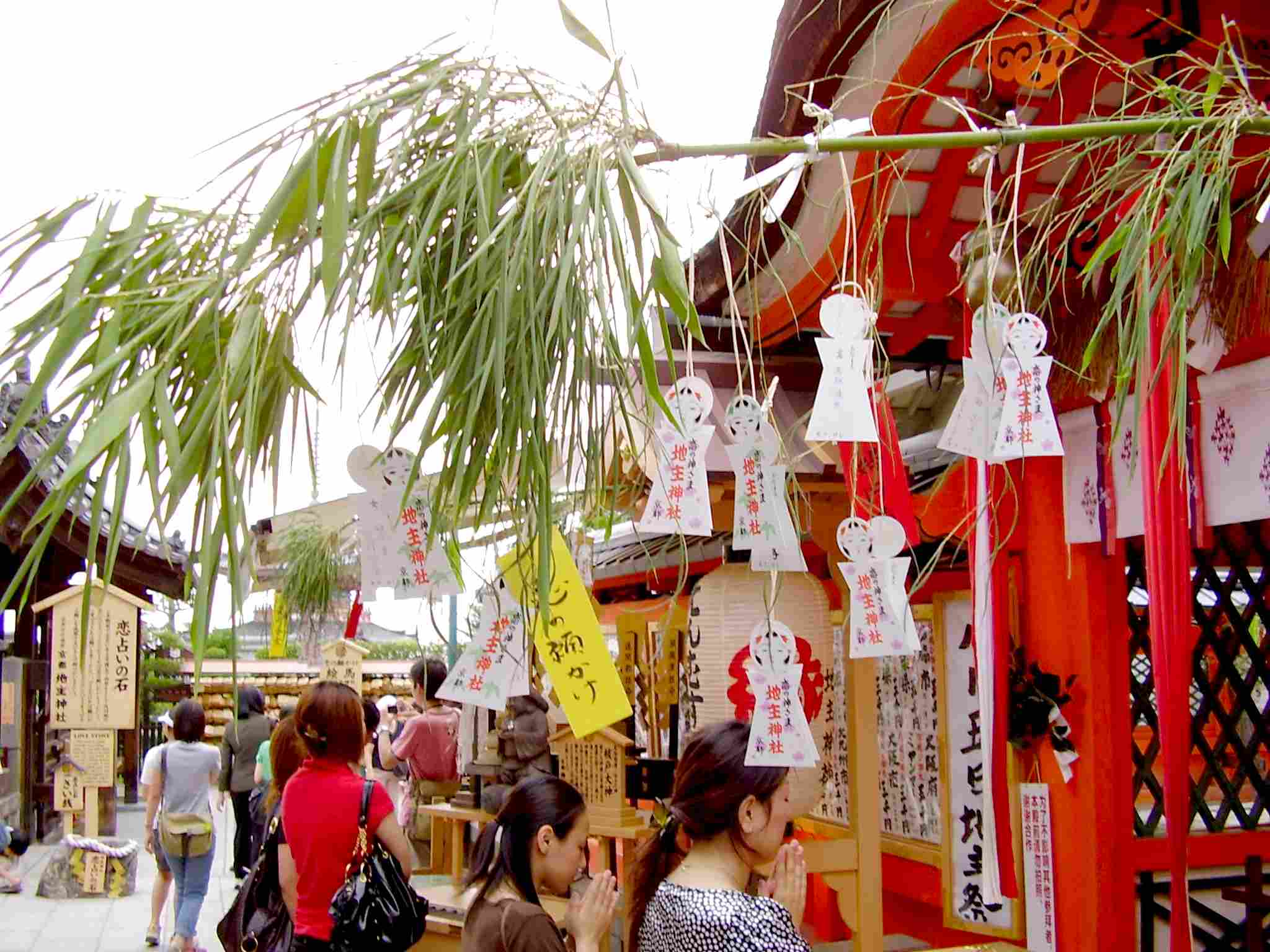
七夕 Tanabata!


Tanabata is a Japanese star festival taking place on the seventh day of the seventh month each year.

七夕は、「星の祭り」の別名、毎年の七月の七日に起こる祭りです。


Tanabata originates from the Chinese Qixi festival and is based upon the story of two deities, Orihime and Hikoboshi.

七夕は織姫と彦星と呼んだ神について中国物語にふまえた「チーシー」祭りから来ます。


According to the story, the two lovers were separated by the Milky Way. 

物語によると、あの二人の愛好家は銀河系で別れされた。


For one day each year, a flock of magpies create a bridge so that the lovers can meet.

毎年一日間、一群のカササギは来て、愛好家が合うために大きい橋を作ります。


Japanese people believe that if it rains on Tanabata, the magpies will not come.

七月の七日に雨が降ると、日本人はカササギが来る事が出来ないを信じられます。


Therefore the lovers must wait yet another year before they can meet.

それに、愛好家は、合う事が出来るために、一年間を待たなければ行けません。


People celebrate Tanabata by writing a wish on a piece of paper and attaching them to bamboo. 
七夕の日に、人は希望を紙に書いて、この紙を竹の枝につなぎます。

The bamboo branches are then placed in the river and later burned.
その後で、この竹の枝は川に流させて、焦げた。

-----------
REF:

Tanabata on Wikipedia - http://en.wikipedia.org/wiki/Tanabata
Tanabata on Japan-Guide: http://www.japan-guide.com/e/e2283.html